Land Shaped to Support What You Build
Earthwork in New Concord for sites requiring excavation, grading, or land shaping before construction or infrastructure installation
Sites with uneven topography, inadequate drainage slope, or elevations that do not match building pad or pavement requirements need earthwork to remove soil from high areas, place fill in low zones, and establish grades that direct water away from structures while supporting loads without settlement. Saorsa Construction Ohio, Inc. performs excavation, grading, and land shaping in New Concord for properties preparing for new construction, paving projects, utility installation, or site development where finished elevations must meet engineered specifications. Heavy equipment moves soil efficiently to create building pads at specified elevations, shape drainage swales that convey runoff without erosion, and prepare subgrades that provide stable foundations for asphalt, concrete, or structures.
The earthwork process establishes proper elevation and drainage flow by cutting high areas and filling low zones to match design grades, compacting fill material in lifts to achieve density that prevents future settlement, and shaping surfaces to direct water toward drainage outlets rather than allowing it to pond or flow toward buildings. Each phase coordinates with utility placement, paving schedules, and foundation work to ensure that grading supports subsequent construction without requiring rework or elevation adjustments.
Arrange a site consultation to discuss grading requirements and how earthwork integrates with your construction timeline.
What Changes After Earthwork Completes
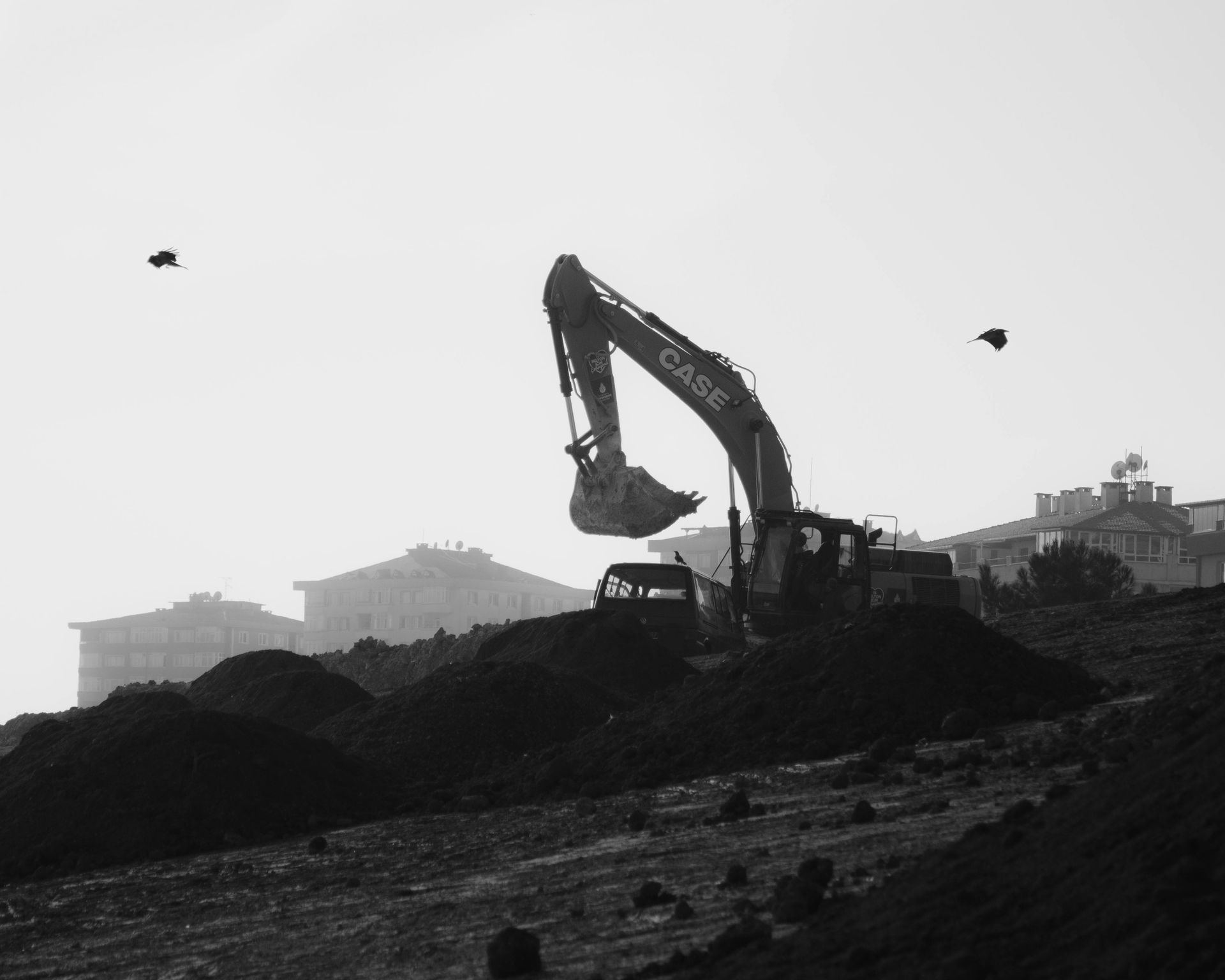
Earthwork uses excavators, dozers, and graders to strip unsuitable topsoil from building areas, cut soil from high zones, transport and place fill material in low areas, and compact each layer to specified density using vibratory rollers or plate compactors. Finished grades are verified with laser levels or GPS grading systems to ensure elevations match plans and slopes meet drainage requirements, and subgrade surfaces are shaped to provide uniform support for pavements or slabs without soft spots or grade breaks that cause cracking.
After earthwork is complete, building pads sit at elevations that position structures above surrounding grades for positive drainage, swales and slopes direct water away from foundations toward drainage outlets, and subgrades provide firm, level surfaces ready for aggregate base or concrete placement. You notice that water flows off the site during rain events rather than pooling in low areas, equipment and vehicles travel across graded surfaces without sinking or rutting, and finished elevations align with door thresholds, utility stub-outs, and adjacent pavement grades. Properly compacted fill areas support loads without settling over time, eliminating the depressions that appear months after construction when fill was not compacted in lifts.
Earthwork is suitable for projects ranging from single-home building pads to large-scale commercial site development, and the scope can include clearing, stripping topsoil for stockpiling, rough grading to establish major contours, and fine grading to prepare surfaces for paving or landscaping. The service does not include demolition of existing structures, removal of unsuitable soil beyond reasonable depths, or engineered fill certification unless specified in project scope.
Site preparation and grading projects in New Concord raise questions about equipment capabilities, material handling, and how earthwork affects project schedules and adjacent properties.
What Property Owners Usually Ask
What determines how much soil must be moved during site grading?
Soil volume is determined by the difference between existing elevations and finished design grades, calculated across the site area to identify cut and fill quantities. Balanced earthwork minimizes the need to import or export soil, reducing costs and project duration.
How is fill material compacted to prevent future settlement?
Fill is placed in layers typically eight to twelve inches thick before compaction, then compacted using equipment matched to soil type and specified density, with each lift tested for moisture content and compaction percentage. New Concord clay soils require moisture control during compaction to achieve specified density without creating soft zones.
What happens to topsoil during excavation and grading?
Topsoil is typically stripped from building and paving areas before grading begins and stockpiled on-site for reuse in landscaping areas, preventing it from being buried or mixed with subgrade material. Stockpiled topsoil is respread after final grading to support vegetation establishment.
How does earthwork coordinate with utility and paving schedules?
Rough grading establishes major site contours and building pad elevations before utilities are installed, then fine grading occurs after utilities are backfilled to prepare surfaces for aggregate base and paving. Coordination prevents utilities from being damaged during grading and ensures that finished grades match utility elevations.
What site conditions affect earthwork efficiency and cost?
Rocky soil, high groundwater, unsuitable material requiring removal, and limited site access all affect earthwork productivity and equipment selection. Site evaluation identifies these conditions early so that grading plans and schedules account for actual soil conditions rather than assumed characteristics.
Saorsa Construction Ohio, Inc. handles site preparation and grading for projects requiring precise elevation control and drainage management. Call (740) 396-9770 to review your site preparation needs and obtain a project estimate.